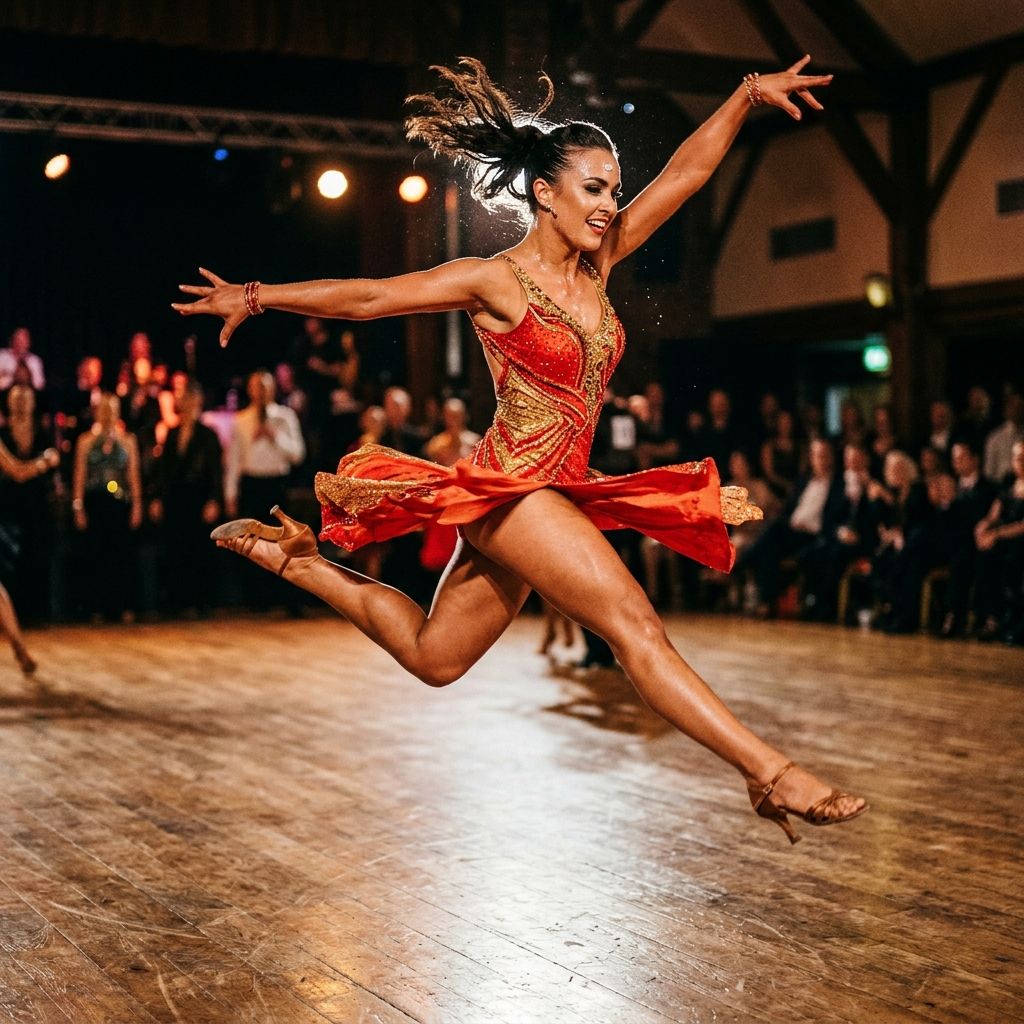
The Cha Cha is a vibrant and rhythmic Latin dance known for its lively and playful character. Originating in Cuba in the 1950s as an evolution of the Mambo and other Afro-Cuban dance styles, Cha Cha was popularized by Cuban composer and bandleader Enrique Jorrín, who introduced the distinctive "cha-cha-cha" rhythm. The dance style gained international recognition and became an essential part of Latin dance culture.
Cha Cha is known for its fun and flirtatious nature. Dancers often engage in playful interactions with their partners, and some of the patterns in Cha Cha play off of the sassy characterization of the dance. Cha Cha footwork is characterized by quick, syncopated steps and precise weight transfers. Dancers execute a combination of chassés, locks, and Cuban breaks, creating a playful and flirtatious feel. The dance incorporates "cha-cha-cha" steps, where three quick steps are taken in two beats of music, emphasizing the dance's signature rhythm. In the Cha Cha, dancers typically use a Latin dance hold, which is more open than the traditional ballroom hold. This slightly more open connection allows for dynamic hip movements and sharper expressive movements to emphasize the rhythm.
Cha Cha is danced to music with a distinctive 4/4 time signature and a moderate to fast tempo, instruments such as congas, bongos, and maracas are commonly heard. Many social dance parties will play upbeat pop music with a sassy or flirty mood to accentuate the same character of cha cha dancing. Songs such as “Bang Bang” by Joe Cuba, “Evil Ways”by Willie Bobo, and “Oye Cómo Va” by Tito Puente are iconic Cha-Cha-Cha songs.
Cha Cha can be enjoyed in a variety of settings, including Latin dance clubs, ballroom competitions, and Latin-themed parties. Social dance events often include Cha Cha as part of their repertoire, providing opportunities for dancers of all levels to enjoy the dance. It is a fun and accessible dance that is enjoyed all over the world.