
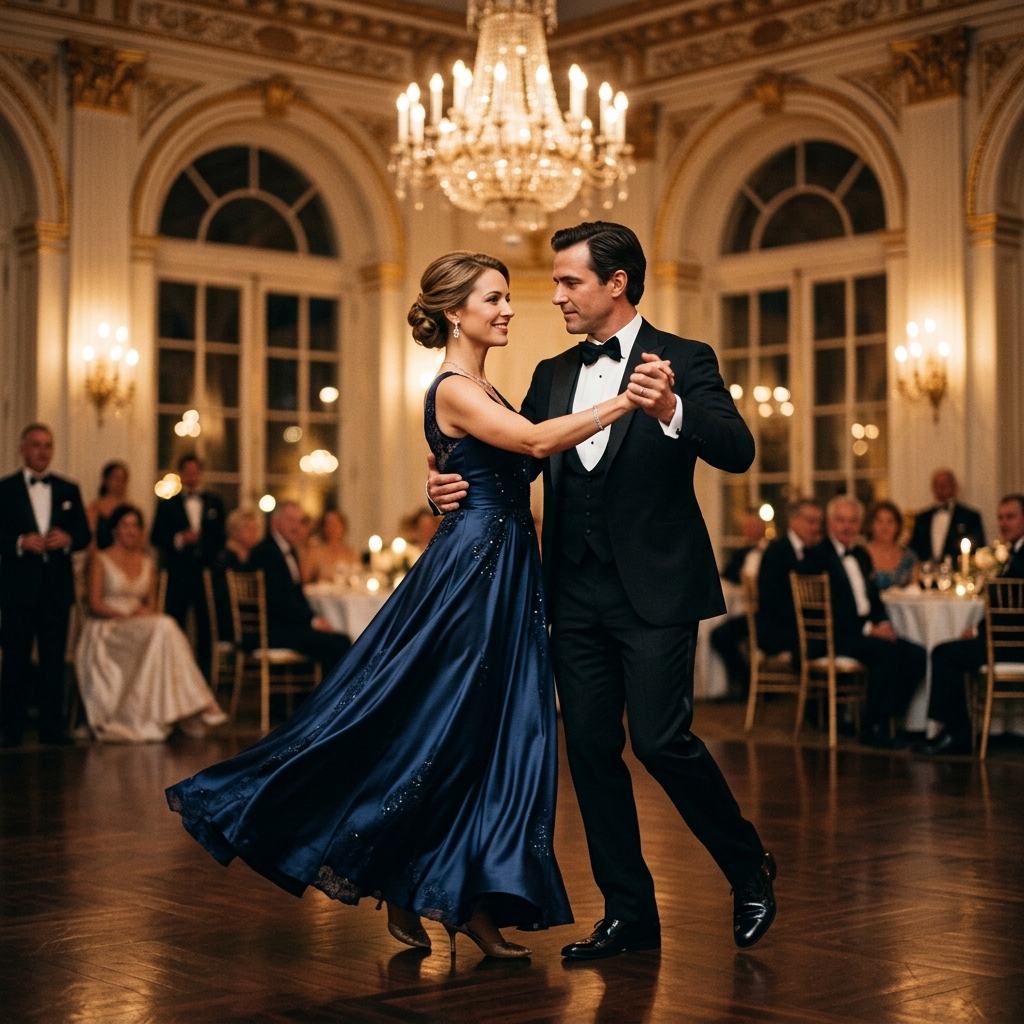
Swing dance is a lively and rhythmic dance style that originated in the United States in the 1920s and 1930s. It evolved alongside the jazz music of that era, particularly during the Harlem Renaissance. "Swing" is actually an umbrella term that encompasses a variety of related dances, including the Lindy Hop, Balboa, and East Coast Swing, among others. Each of these dances has its unique characteristics but shares the commonality of being energetic and fun.
Description and Style
- Movement: Swing dances are known for their bouncy, energetic movements. They often include lifts, spins, and quick footwork.
- Posture and Connection: Most swing dances are done in a couple, with a lead and follow. The connection between the dancers is more relaxed and playful compared to other ballroom dances.
- Variety: There is a great variety within swing dancing. For example, the Lindy Hop is characterized by its athletic and improvisational nature, while Balboa is has a closer connection and a greater emphasis on footwork.
Fun Aspects
- Energetic and Upbeat: Swing dancing is inherently joyful and energetic, making it a lot of fun to both watch and participate in.
- Social Aspect: Swing dancing is often done in social settings, encouraging interaction and communication between dancers.
- Improvisation: Many forms of swing allow for a great deal of improvisation, giving dancers the freedom to express themselves and be creative.
Music
- Swing dancing is called so due to its association with swing jazz, which has a strong, rhythmic underpinning and was popularized by the big bands of the 1930’s. This music is characterized by its "swung" rhythm, a kind of lilting groove that encourages the bouncy movements of the dance.
- Modern swing dancing can be done to a variety of music styles, as long as the music has a good beat and rhythm for dancing.
Venues
- Swing Dance Clubs and Socials: There are clubs and social dance events dedicated to swing dancing, where people of all ages gather to dance.
- Dance Studios and Workshops: Many dance studios offer swing dance classes and workshops, catering to all levels from beginners to advanced dancers.
- Music Festivals and Concerts: Swing dancing is often seen at jazz and music festivals, particularly those featuring big band or retro music.
- Competitions: Swing dance competitions are held worldwide, showcasing both amateur and professional dancers.
Swing dance remains popular due to its high energy, joyful nature, and the social interaction it fosters. It is America’s greatest partner dance export. Whether it's in a class, at a social dance, or a music festival, swing dancing offers a fun and dynamic way to connect with others and enjoy music.