
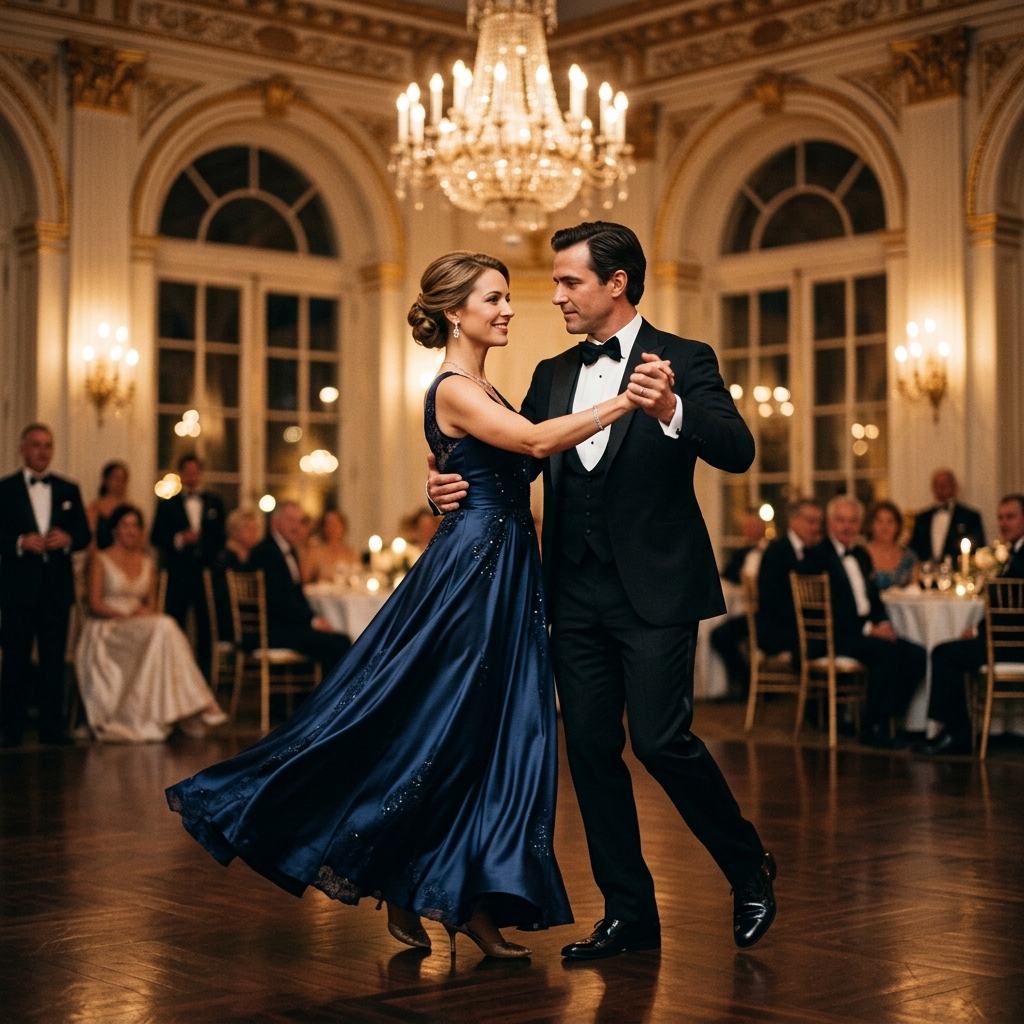
The Waltz is a classic ballroom dance known for its smooth, flowing movements and elegant simplicity. Waltz started as a folk dance in the late 13th century in Germany and Austria, and gained popularity across Europe over the next four centuries. By the late 18th century, it was a worldwide phenomenon. The name originates from the German verb ‘Waltzen’, meaning ‘to roll’, in tribute to the way the dancers rolled across the floor in partnership with each other. This was hugely scandalous during a time when almost all public dances were court dances, and the dancers were dancing by themselves as part of a bigger group.
Description and Style
- Movement: The Waltz involves a series of gliding steps that create a fluid, continuous motion. It's distinguished by its rise and fall action, with dancers moving gracefully in a circular pattern across the dance floor.
- Posture: Partners maintain a traditional ballroom frame, with the lead’s left hand holding the follow’s right, and the leads right hand on the follow’s back while the follow places their left hand on the lead’s right arm.
- Footwork: The basic step pattern is a simple "box step," which forms the foundation for more complex turns and figures.
Fun Aspects
- Elegance and Romance: Many find the elegance and romantic feel of the Waltz appealing. It's often associated with sophistication and timeless charm.
- Accessibility: The basic steps of the Waltz are relatively easy to learn, making it a popular choice for beginners in ballroom dancing.
- Variety: Advanced dancers enjoy the challenge of incorporating more complex maneuvers, like spins and dips.
Music
- Waltz music is typically in a 3/4 time signature, characterized by a flowing rhythm. Classical compositions by composers like Johann Strauss II known as the “Waltz King”) are iconic. However, modern Waltz music can range from classical to contemporary pop songs adapted to the 3/4 time.
Venues
- Ballrooms: Traditional ballrooms are the most common venues for Waltzing, especially in formal settings.
- Social Dance Events: Many social dance clubs and events feature the Waltz among other dances.
- Weddings and Galas: The Waltz is a popular choice for first dances at weddings and is often seen at formal galas and balls.
- Competitive Dance: Waltz competitions are a part of both amateur and professional ballroom dance tournaments.
Overall, the Waltz is appreciated for its grace, romantic appeal, and the sense of connection it fosters between dance partners. Whether in a grand ballroom or a casual social dance setting, the Waltz continues to captivate dancers of all levels with its timeless elegance.