
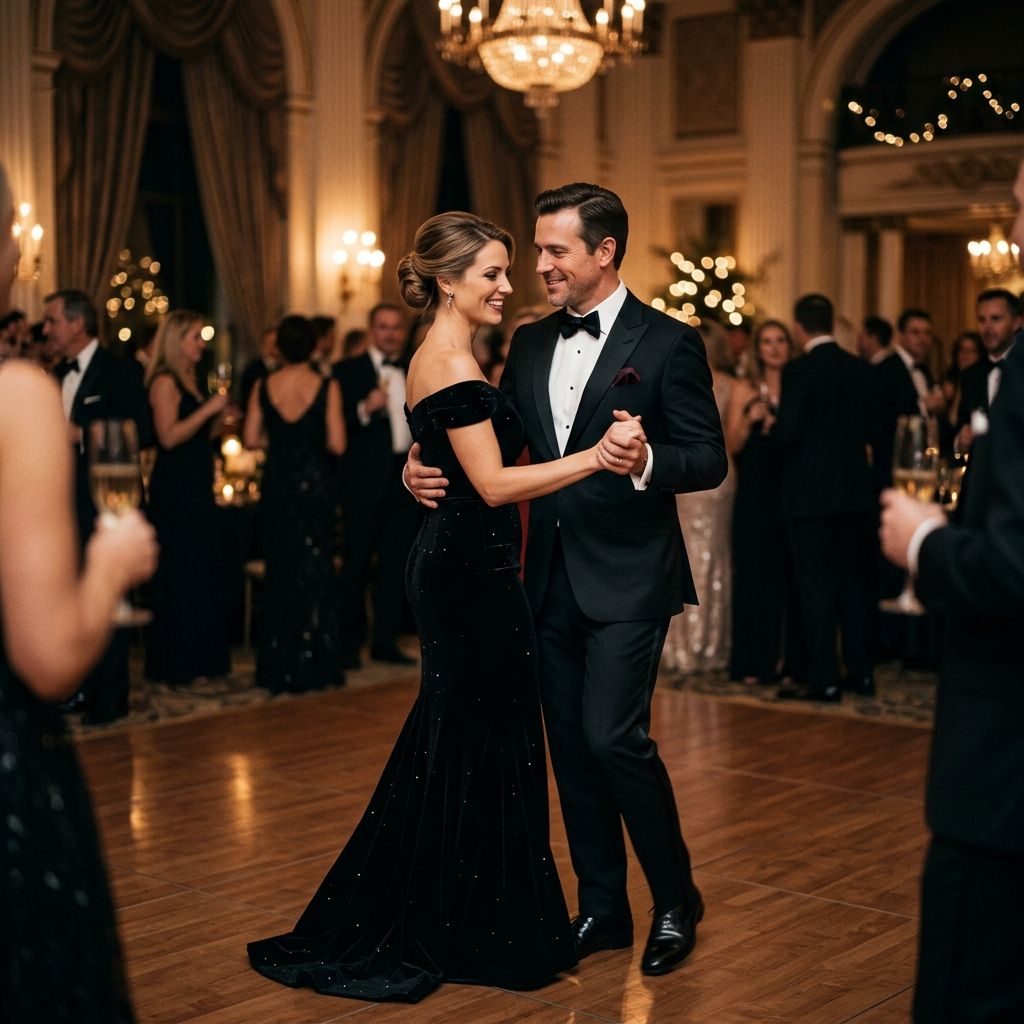
1. Why Specific Dances Matter
Not all dances are created equal. You might love watching the Paso Doble on television, but if you break out a Paso Doble at a crowded Manhattan cocktail hour, you are going to clear the floor (and possibly knock over a tray of champagne).
When preparing for social events—weddings, corporate galas, charity balls, or cruises—you need a "Swiss Army Knife" of dances. You need styles that work with modern music, in crowded spaces, wearing formal attire.
2. The "Smooth" Essentials
Smooth dances travel around the floor. However, in heavily crowded social settings, you adapt them to rotate in smaller "box" shapes rather than sprinting down the line of dance.
- The Foxtrot: The undisputed king of the social floor. It dances to Frank Sinatra, Michael Bublé, and thousands of modern mid-tempo 4/4 songs. It looks effortlessly classy and is incredibly easy to lead and follow in a crowded room.
- The Waltz: Elegant, sweeping, and romantic. It requires music in 3/4 time (1-2-3, 1-2-3). While it's beautiful, it's highly specific to its music, making it the most popular choice for formal First Dances rather than late-night party dancing.
- The Tango: Passionate and sharp. American Tango is fantastic for social dancing because it is compact and doesn't require massive amounts of floor space, making it surprisingly adaptable to dimly lit, crowded venues.
3. The "Rhythm" Essentials
Rhythm (or Latin) dances are your "spot" dances. You don't travel around the room; you stay in one spot and rotate or swap places. This makes them the ultimate weapon for packed dance floors and energetic pop music.
- Salsa: If you learn only one rhythm dance in New York City, make it Salsa. The NYC Salsa scene is legendary, and knowing the basic steps opens doors in both formal Latin clubs and casual social parties.
- East Coast Swing: Extremely energetic and fun. Swing works perfectly with upbeat rock, pop, and blues music. Because of the open hold and constant rotational energy, it’s a crowd-pleaser that requires very little space.
- Rumba: The slow, romantic Latin dance. When the DJ puts on a slow pop song or a romantic ballad, Rumba is what you dance. It relies on subtle hip motion (Cuban motion) rather than traveling, making it perfect for the center of the dance floor.
The Ultimate Beginner Combo
If you have a wedding coming up and want the highest ROI, ask your instructor to teach you Foxtrot and Swing. Between those two styles, you will be able to comfortably dance to 95% of the music that a live band or DJ will play.
4. Group Classes: Your Secret Weapon
The best way to learn these social dances? Socialize while you learn! Group classes are specifically designed to teach you the fundamentals of these very styles (Foxtrot, Salsa, Swing, Tango) while allowing you to practice rotating partners. This mimics real-world wedding receptions and dramatically improves your lead/follow reflexes.


